
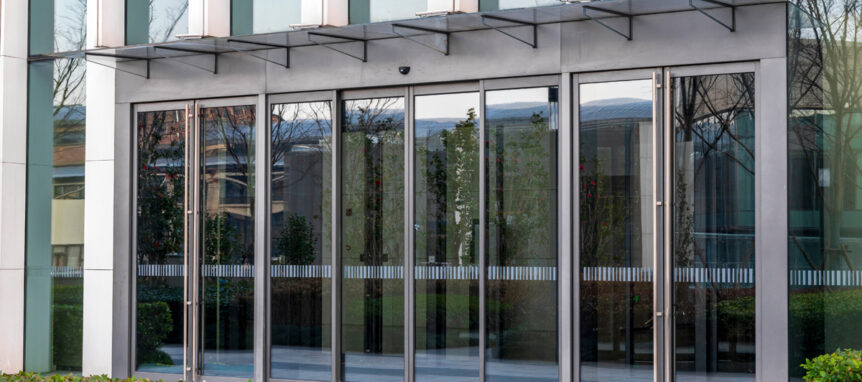
Commercial doors in busy buildings can experience hundreds of openings and closings throughout a typical day. Customers enter and exit, employees move between areas, and vendors make deliveries, placing repeated stress on the doors and their components. Commercial door systems are designed to handle frequent use, but even durable equipment will eventually show signs of wear when subjected to constant traffic.
For businesses in Naples, Fort Myers, and throughout Southwest Florida, understanding how high foot traffic affects commercial doors can help prevent unexpected failures. Regular inspections and timely repairs can keep entry systems operating safely and reliably while extending the lifespan of doors and their hardware.
Repeated Use Gradually Wears Down Hardware
Every time a commercial door opens or closes, several components work together to control its movement. Hinges, pivots, closers, handles, locks, and other hardware are repeatedly placed under stress. In a high-traffic building, this process happens continuously throughout the business day.
Over time, hardware can loosen, wear down, or move out of adjustment. A handle may begin to feel loose, a hinge may develop excessive movement, or a door may no longer close as smoothly as it once did. These changes often develop gradually, which makes them easy to overlook during everyday operations.
Addressing worn hardware early can help prevent additional strain on other parts of the door system and reduce the likelihood of a sudden failure.
Door Closers Can Lose Proper Adjustment
Commercial door closers are particularly affected by frequent use. These components control how quickly and smoothly a door returns to the closed position after someone passes through it.
As a closer experiences repeated cycles, its performance may change. A door might begin closing too quickly, moving unusually slowly, or failing to latch completely. A door that slams can create a safety concern and place additional stress on the frame and hardware. A door that does not close completely may create security or climate-control issues.
Changes in closing speed or movement should be inspected rather than treated as a normal consequence of a busy entrance.
Alignment Problems May Develop Over Time
Proper alignment is essential for smooth commercial door operation. Heavy daily use can gradually affect hinges, pivots, frames, and mounting points, eventually causing a door to shift from its intended position.
One of the first signs may be a door that begins rubbing against the frame or dragging along the floor. Employees might also notice that the door requires more effort to open or that the latch no longer lines up properly.
Continuing to operate a misaligned door can place unnecessary pressure on surrounding components. Correcting alignment problems promptly can help prevent damage from spreading to other parts of the entry system.
Automatic Doors Face Additional Wear
High-traffic automatic doors have additional components that must perform every time someone approaches an entrance. Sensors, operators, controls, and moving components work together to detect visitors and safely open and close the doors.
The more frequently an automatic system operates, the more important routine professional attention becomes. Changes in sensor performance, unusual noises, delayed opening, inconsistent movement, or unexpected stopping can indicate that the system needs service.
Automatic doors are often found in high-traffic properties because they provide convenient access and help maintain smooth pedestrian flow. Keeping these systems properly maintained is important for preserving both their convenience and dependable operation.
Locks and Latching Hardware Can Be Affected
High foot traffic can also take a toll on commercial door security components. Every opening and closing cycle involves interaction between the door, frame, latch, and associated hardware. Gradual wear or alignment changes may eventually prevent the door from latching as securely as intended.
A business may first notice that employees need to pull or push the door after it closes to make sure it has latched. Locks may also become increasingly difficult to operate if the door and frame are no longer properly aligned.
Problems like these should not be ignored. Exterior commercial doors need to close and secure consistently to help protect the property during and after business hours.
Southwest Florida Conditions Can Add to the Wear
High foot traffic is not the only challenge commercial doors face in Southwest Florida. Heat, humidity, heavy rain, and coastal air can add environmental stress to systems that are already experiencing constant daily use.
Moisture and coastal conditions can contribute to corrosion and deterioration of certain components, while worn weather seals may allow hot, humid outdoor air into the building. When environmental exposure is combined with frequent operation, regular inspections become particularly important for identifying developing problems.
Businesses in Naples, Fort Myers, and nearby communities can benefit from addressing both mechanical wear and climate-related deterioration as part of their commercial door maintenance.
Preventative Maintenance Helps Reduce Disruptions
Commercial door wear is unavoidable, but unexpected failures do not always have to be. Preventative maintenance gives businesses an opportunity to identify loose hardware, worn components, alignment issues, closer problems, and other concerns before they interfere with normal operations.
This is particularly valuable for busy properties where a malfunctioning entrance can quickly create inconvenience for customers and employees. Addressing smaller issues early may also help extend the life of the overall door system and reduce the need for more extensive repairs.
B & B Door Company provides commercial door repair, maintenance, and installation services for businesses in Naples, Fort Myers, and throughout Southwest Florida. If your high-traffic commercial doors are becoming difficult to operate or showing signs of wear, contact B & B Door Company to have your entry systems professionally evaluated.