
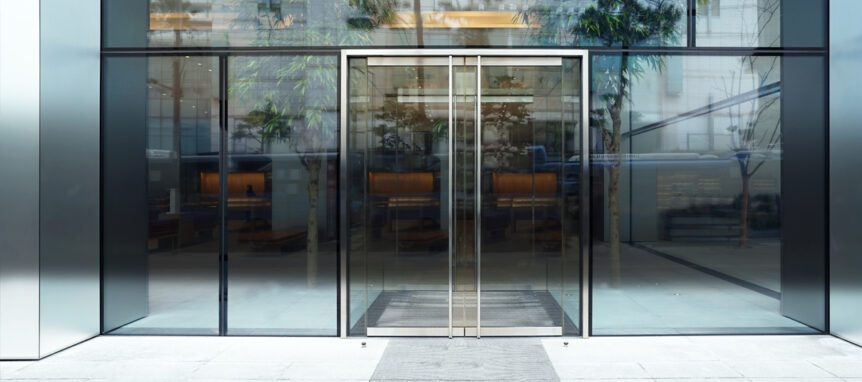
Commercial doors are used repeatedly throughout the day, often without customers or employees giving much thought to the components that keep them operating correctly. One of the most important of these components is the door closer. A properly functioning commercial door closer controls how a door moves after it has been opened, helping it close smoothly, safely, and securely.
For businesses in Naples, Fort Myers, and throughout Southwest Florida, reliable door closers can make a significant difference in the everyday performance of an entrance. When closers become worn, damaged, or improperly adjusted, they can affect safety, accessibility, security, and even the comfort of the building.
Controlling How a Commercial Door Closes
The primary purpose of a commercial door closer is to control the movement of the door as it returns to the closed position. Without proper control, a heavy commercial door could swing or slam shut, creating an unpleasant experience and potentially putting customers or employees at risk.
A properly adjusted closer allows the door to move at a controlled speed before securely reaching the frame. This smooth operation is particularly important in high-traffic commercial environments where people may be entering and exiting throughout the day.
If a door suddenly begins closing faster or slower than usual, it may indicate that the closer needs adjustment, repair, or replacement. Addressing the issue early can help prevent additional wear on the door and surrounding hardware.
Helping Create a Safer Entrance
Commercial doors can be heavy, especially when they incorporate large glass panels or durable materials designed for frequent use. A malfunctioning closer that allows a door to slam unexpectedly can create a safety concern for anyone passing through the entrance.
Children, older adults, individuals with mobility limitations, and customers carrying packages may be particularly affected by a door that moves unpredictably. A closer that does not provide enough control may also cause the door to rebound or fail to close properly.
Keeping commercial door closers in good working condition helps create more consistent door movement. Visitors know what to expect when they enter or leave the building, contributing to a safer and more comfortable experience.
Supporting Accessibility and Ease of Use
Accessibility is another important consideration when evaluating commercial door performance. A door should not be unnecessarily difficult for customers or visitors to operate. If a closer is improperly adjusted, opening the door may require excessive force or the door may begin closing before someone has enough time to pass through comfortably.
Proper closer adjustment can help a commercial entrance function as intended while supporting applicable accessibility requirements. Businesses should also pay attention to changes in how their doors feel during normal operation. If customers struggle to open a door or employees notice that it is becoming increasingly difficult to use, professional inspection may be necessary.
Maintaining appropriate door operation is particularly important for businesses that regularly serve individuals with different mobility needs.
Ensuring Doors Close and Latch Properly
A commercial door closer does more than prevent a door from slamming. It also helps ensure that the door returns completely to the closed position and engages with the latch as intended.
When a closer becomes weak or improperly adjusted, the door may stop just before reaching the frame. Even a small gap can create security concerns if an exterior door does not latch after someone enters or exits the building. Employees may then have to manually check the entrance throughout the day to make sure it has closed correctly.
Reliable closing and latching are particularly important for exterior entrances, employee access points, and other areas where businesses depend on their doors to help control access to the property.
Reducing Unnecessary Wear on Door Components
A door that repeatedly slams or moves incorrectly can place additional stress on hinges, pivots, frames, locks, glass, and other hardware. Over time, that additional force can contribute to premature wear and increase the likelihood of repairs.
A properly functioning closer helps control that movement and reduces unnecessary impact each time the door is used. For high-traffic businesses, even a small operational problem can be repeated hundreds of times over the course of a day, making proper adjustment especially important.
Routine maintenance can identify leaking closers, loose mounting hardware, alignment problems, or changes in closing speed before they begin affecting other parts of the door system.
Maintaining Indoor Comfort in Southwest Florida
Commercial door closers can also contribute to indoor comfort by helping exterior doors remain closed when they are not being used. In Southwest Florida’s hot and humid climate, a door that remains partially open can allow conditioned air to escape while letting heat and humidity enter the building.
This can make entrances less comfortable and cause HVAC equipment to work harder to maintain the desired indoor temperature. During periods of heavy rain, a door that does not close properly may also leave an entrance more exposed to wind-driven moisture.
Keeping door closers properly adjusted helps ensure exterior entrances return to the closed position after each use.
Keep Your Commercial Doors Operating Properly
Commercial door closers may be relatively small components, but they play an important role in the safety, accessibility, security, and everyday performance of an entrance. Changes in closing speed, difficulty opening the door, slamming, or failure to latch are all signs that professional attention may be needed.
B & B Door Company provides commercial door repair, maintenance, and installation services for businesses in Naples, Fort Myers, and throughout Southwest Florida. If your commercial doors are no longer opening and closing as they should, contact B & B Door Company to have your door system professionally evaluated.